


Welcome to Polymathic Being, a place to explore counterintuitive insights across multiple domains. These essays explore common topics from different perspectives and disciplines to uncover unique insights and solutions.
Today's topic challenges us to be capable, dangerous, and meek. To manage that balance, we’ll uncover the truth about meekness, explore examples from the military, and then provide insights on how to become a finely honed, lethal power.
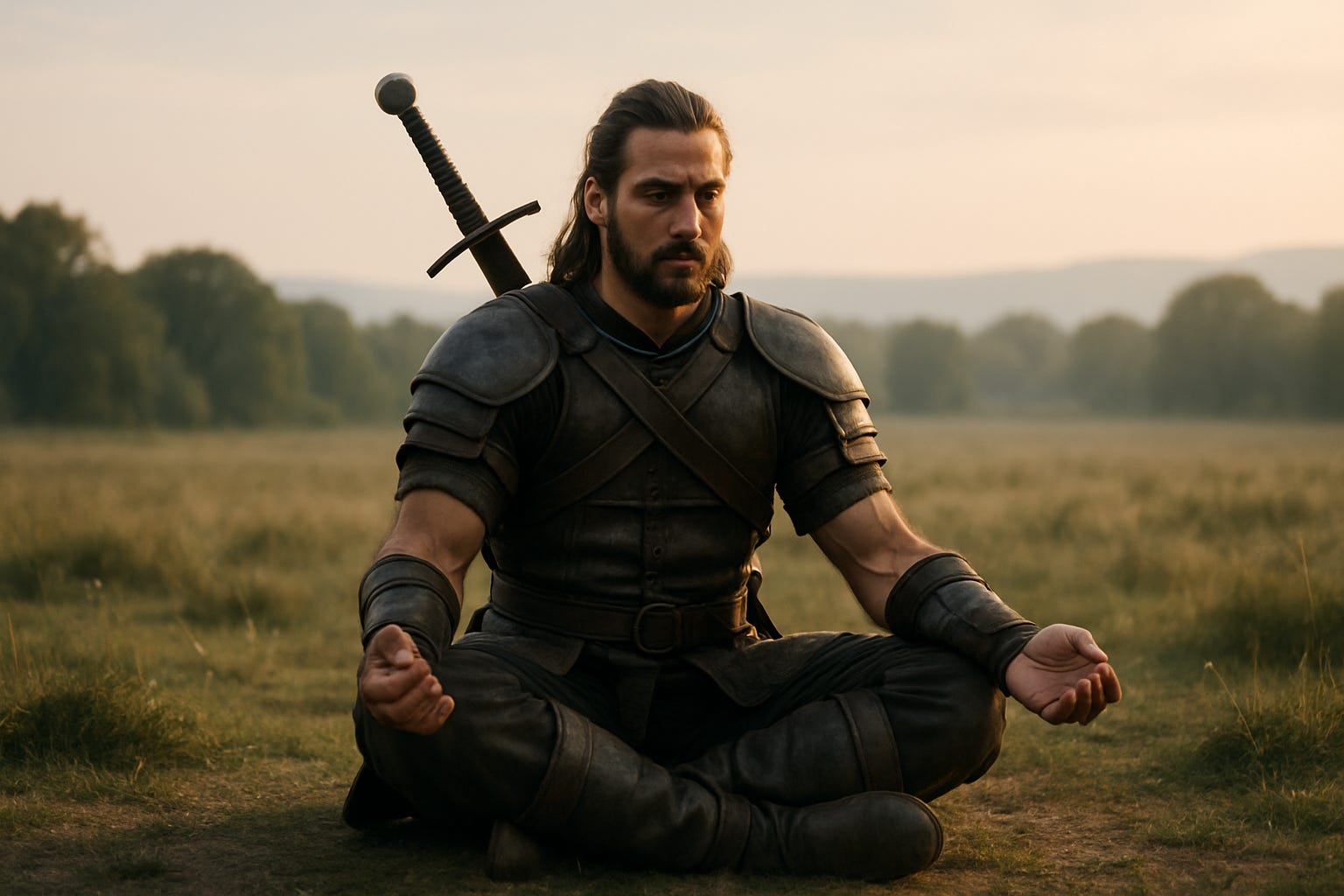
Meekness
“The meek shall inherit the Earth.” - Matthew 5:5
This is a commonly misunderstood verse from the Bible. It’s not talking about weak, passive, timid, or mild. It’s describing strength under control, characterized by humility, self-control, and gentle submission to a higher calling. In this case, a God.
That’s because a meek person maintains their agency, is difficult to provoke or manipulate, and grows themselves and others around them. Another way to think about it is that it’s intentionally wielding power with gentleness and restraint. It isn’t a lack of power but control of it. Jordan Peterson phrases it like this:
“A harmless man is not a good man. A good man is a very, very dangerous man who has that under voluntary control.”

And this is the type of person you want to hold that power, because truly weak people are some of the most dangerous, both in their desire to weaponize culture as well as their susceptibility to being weaponized by others. These are the type who turn trauma into fragility instead of realizing we can hone it into antifragile growth!

It goes right along with the adage: “Hard times make strong men, strong men create good times, good times create weak men, weak men create hard times.”
But back to the word meek. The Greek in that verse is praotēs, which Aristotle defines as a balance between the extremes of cowardice and irascible anger. Praotēs was often used to describe a successfully trained warhorse and clearly did not mean weak, but finely honed power that was restrained.
Compare this to peace, which Augustine refers to as “the tranquility of order.” What he means is that peace is not merely the absence of conflict but rightly ordered powers coupled with discipline. This is where it gets interesting because there is no virtue in peacefulness or ‘meekness’ if it’s merely helplessness. Meekness requires capability yoked to conscience and virtue. The meek who inherit the earth are those with disciplined power that refuses predation. They’re the capable warrior who doesn’t need to unsheathe their sword.
Sam Alaimo recently wrote The Cure for Broken Body Language is Clearing Rooms, where he describes how becoming capable demands we change our focus from weakness toward honed, deadly skill:
Every door we approach, open, and enter, is a reminder to see, walk, stand, and speak as if ready for a good fight…
…for the good of the whole.

Be Deadly
“For the good of the whole.” It's a real element that also finds its way into our stories. In The Lord of the Rings, future king and lethal swordsman Aragorn is described as 'flowing’ in his movements. He didn’t have to flex, bluster, or bluff; he just had to stand, and every element of his body was under such perfect control that it exuded grace. It goes with the common literary trope where sword fighters are described with snake-like descriptions, like coiled, because the mastery of the fight is the mastery of the body.
What that results in is the realization that a strong and capable person rarely looks weak. A weak person, however, rarely looks capable.

Let me explain this with a real example from the Army. One of the reasons we train rigorous physical fitness isn’t because your weakness gets you killed; it gets your buddy killed because he's the threat, not you. You just provided the opening to eliminate the threat. Back to Sam, who shares, “There are collective consequences for our individual failures.” I've seen that in combat, where Corporal Donuts can't keep up and the enemy doesn't even deign to aim at him. He's already a casualty without having to fire a bullet. It’s better to leave him around to provide openings for the next battle.
In contrast, being capable isn’t aligning with the Andrew Tate bullshit, and just like Rowan Davis describes below, the true strength isn’t in weakness or flex-nuts strength but that quiet, restrained, yet lethal capability that you can pass by in the street without noticing but will be the first at your side in times of need.
To be clear, this isn’t a glorification of violence but the capability for violence subordinated to moral ends. This capability can even be coupled with pacifism. That’s more or less my position right now. I’m a pacifist who is capable and willing to do violence to protect that peace. I don’t think that’s an oxymoron either, as peace is my moral end. I achieve that by being someone you wouldn’t want to war with.
So, be a warrior. Be capable. Be a warhorse a child can ride to battle. Be the master of your mind and body. Claim your agency and don’t allow manipulation. Grow others around you to be as capable as you. Demand capability from those you love while holding yourself to a higher account than anyone else. Do this with meekness, and you will inherit the earth.1

Polymathic Being is a reader-supported publication. Becoming a paid member keeps these essays open for everyone. Hurry and grab 20% off an annual subscription. That’s $24 a year or $2 a month. It’s just 50¢ an essay and makes a big difference.
Further Reading from Authors I Appreciate
I highly recommend the following Substacks for their great content and complementary explorations of topics that Polymathic Being shares.
Goatfury Writes All-around great daily essays
Never Stop Learning Insightful Life Tips and Tricks
Cyborgs Writing Highly useful insights into using AI for writing
Educating AI Integrating AI into education
Socratic State of Mind Powerful insights into the philosophy of agency
After this was published, a discussion highlighted that Greek praotēs is the term translated as “gentleness” in the stoic writings. Out of curiosity, I looked at whether the term is also translated as gentle in the bible and, in fact, the fruits of the spirit contain the same praotēs in Galatians 5:22-23:”But the fruit of the Spirit is love, joy, peace, forbearance, kindness, goodness, faithfulness, gentleness [praotēs] and self-control.”
I did connect the word to submissiveness and weakness but you bring in a new meaning and philosophy layering creating a concept. While I don’t know where this leads I know that it got me thinking!
Reading your posts and your books is a post graduate course in Western Civilization. I am constantly amazed at the breadth and depth of your knowledge. Thank you.