


Welcome to Polymathic Being, a place to explore counterintuitive insights across multiple domains. These essays explore common topics from different perspectives and disciplines to uncover unique insights and solutions.
Today’s topic investigates two views of the world that exist across societies. It’s a simplified view with significant consequences for understanding different perspectives. It’s critical to personal relationships as well as how we can view larger social systems.
Years ago, I had a great mentor, let’s call him Craig, who was my company commander in Korea. We were out at a gunnery event shooting the Bradleys and, in a break in the training, he asked me about my girlfriend, now wife, as our relationship was getting serious entering late summer 2006. The resulting discussion wasn’t about how in love we were; it was about how frustrated we both were over a disagreement.
As a bit of backstory, we started dating after I commissioned in the Army and right before I entered Ranger School. From there, I went to Airborne School, and if you’ve read The Things You Do For Love, you’ll remember how I forged a doctor’s signature on my return-to-duty form so I could go on a cruise with her, my cousin, and his girlfriend (now wife). After that adventure, I went to Korea, where our relationship was limited to video and phone calls.

On the positive side, it forced us to learn how to communicate.
On the downside, it gave us many opportunities to step on each other’s toes.
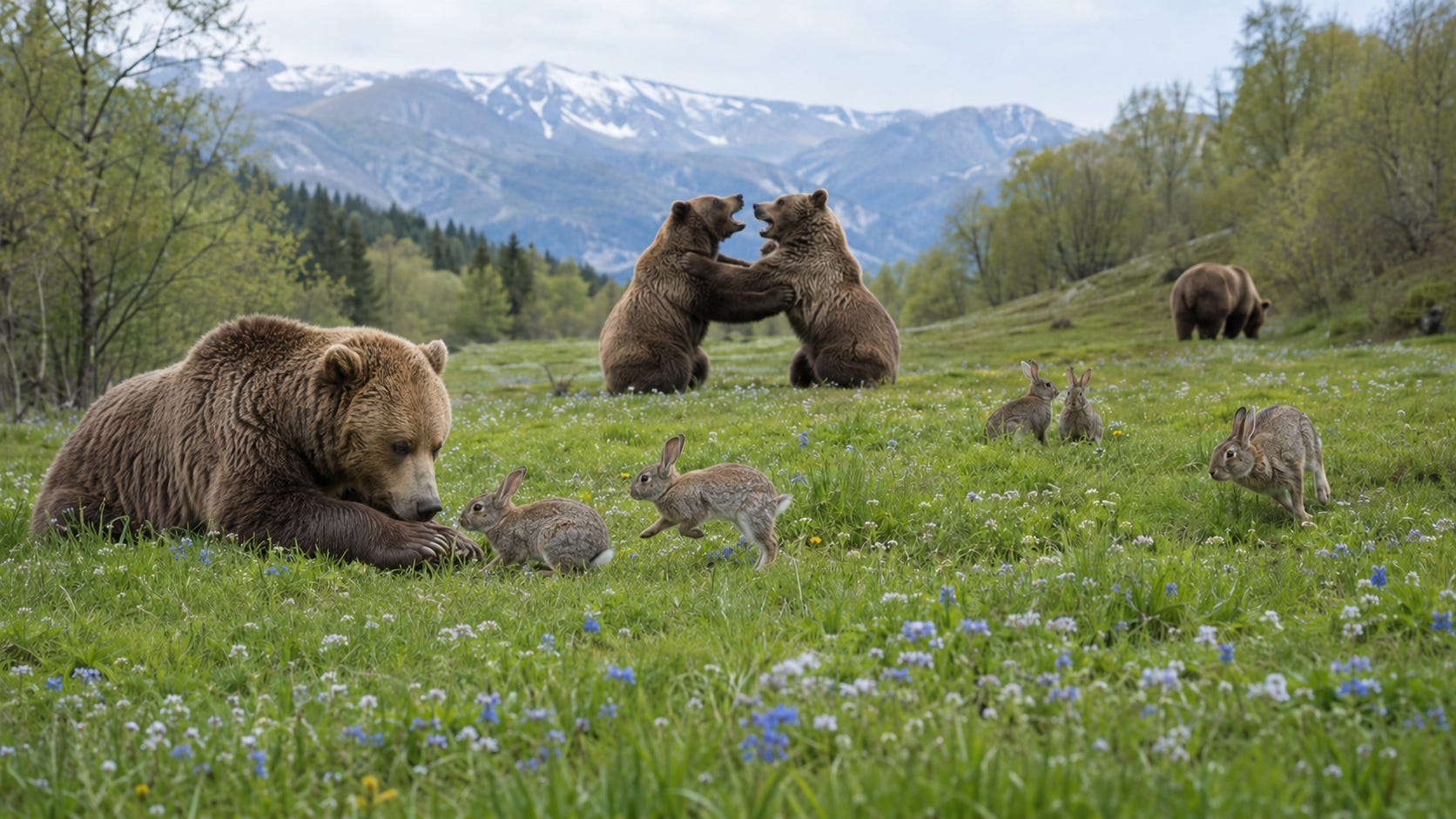
I don’t even remember the topic of our disagreement, but it boiled down to her feeling uncomfortable with it and my being frustrated because I wanted to dig in and dissect it. Craig listened to my lament and said something along the lines of “There are bears and there are bunnies. No matter how well-intended the bears are and no matter how gently they play, the bunnies still think they’re going to die.”
I wasn’t trying to be malicious; I was well-intentioned and wanted to play with a complex idea. It’s likely a precursor to my love of Mixed Mental Arts, where we grapple with complex ideas in the octagon of life… However, when a bunny squares off against a bear, it really doesn’t matter how well-intentioned I was; the matchup seemed imbalanced.
Now, it’s funny because my wife is actually not a bunny. She’s just a smaller bear, and people she worked with as an engineer fully assumed she wore the pants in the family because she was a bear to their bunny. However, the analogy holds when considering different perspectives and different personalities at play in the world.
On the surface, this seems totally obvious. We have many names for this understanding, from emotional intelligence to Personality Proclivities to situational leadership. At work, we talk of bringing our whole selves to work, and in life, we appreciate not getting trampled.
At least, that’s how we tend to deal with the bears.
But how do we deal with the bunnies?
Bunnies, specifically the prolific European varieties, live underground during the day in large warrens of family groups. They emerge in the evenings and mornings, when the light makes it harder for predators to find them. Their eyes, on the sides of their heads, provide near 360-degree peripheral vision, and they’re built to jump and run.
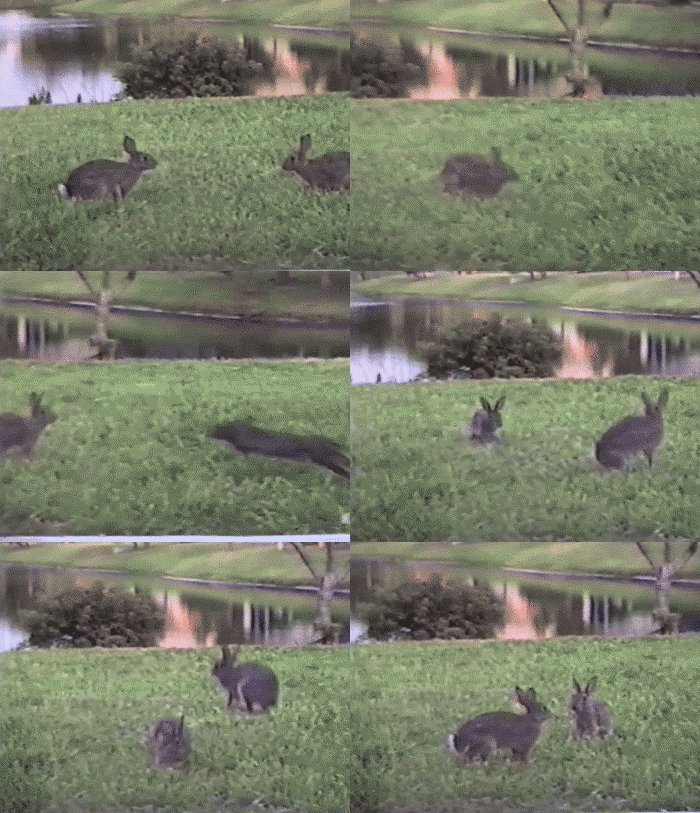
That’s a real rabbit, and for our bunny analogy, that translates into Personality Proclivities that look more introverted, conscientious, very agreeable, and higher in neuroticism. The warren for these folks was family, church communities, social clubs, internet forums, and more.

Just to clarify, this isn’t a bad thing at all. The world needs bunnies to create balance. The challenge emerges, as we explored in Born or Trained, that current Western culture, and I’d argue culture through time, overtly values the bears, not the bunnies.
So who are the bears? Largely extroverted, also conscientious, but not anal retentive, willing to be disagreeable, naturally open, and very low neuroticism. They’re rumbling and rolling, and wrestling with ideas, and challenging the status quo.
As we looked at business leaders before, we value traits such as openness, structured conscientiousness, being able to get along without being a pushover, low anxiety and self-doubt, and being outgoing and engaging. Almost every leadership book and every celebration of leaders, both men and women, value the bears. What else is the phenomenon of the ‘boss bitch?’
Worse, we value the bears so much we view any difference between the bears and the bunnies as some form of systemic oppression or structural limitation, which, to be clear, are systems more often designed to control the bears and protect the bunnies. However, instead of appreciating the bunnies, and teaching the bunnies to appreciate and understand the bears, we’ve been spending decades destroying the systems and have focused on turning bunnies into bears.

A challenge emerges that, when bunnies try to be bears, they’re going against their natural inclinations no matter how much they’d like to be a bear and no matter how much society values bears. So, they play a different game to level the playing field.
For example, I know a person who is a pure bunny. She’s trying really, really hard to be present in the world, but she exudes nervous tension. Everything is a threat. Everything can be, must be, safer. In the face of an upper-middle-class life, living in an extremely low crime/risk area, with an advanced education, and a well-respected career, she’s still a bunny acting like she’s surrounded by predators.
And if the bears are playing, no matter how gently, you’ll hear about her worries, typically through a third party and never directly. This isn’t manipulative, covert narcissism that we explored, either. It’s just that the world, outside the warren, will never be as safe, and she’s a bunny.
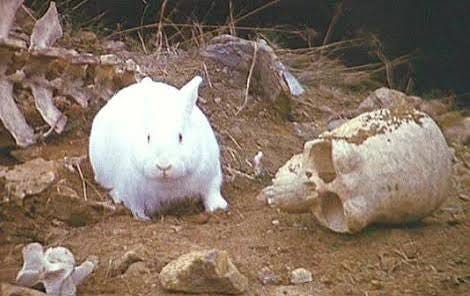
This leads to a counterintuitive twist that the bunnies are an unappreciated threat to the bears. We have many systems in place to prevent the trampling of bunnies and, especially when they’re women, we have no shortage of other bears willing to white-knight. However, this is sometimes weaponized because rabbits, to quote Monty Python, can also be “ the most foul, cruel, and bad-tempered rodent you ever set eyes on." It’s bad when it’s intentional, but the real danger, to the bears, is when the bunny doesn’t even know what they’re doing, or why, or what that does to the bears.
Now, think back to the COVID lockdowns six years ago and the number of people celebrating the ability to stay home, in their warrens, playing it safe, eagerly masking, and reacting to anyone who questioned the safety of the warren as a threat. The problem is that they undermined the bears, attacking anything that they viewed as a threat no matter how mundane.
Adding to this, I feel like over the past 20 years we have seen the revenge of the bunnies, as society has demanded they play while allowing them to rewrite the rules of play. The result is a massive mismatch: over-indexing on threats, underappreciating the violence needed to keep danger away, and pushing bunnies to be bears while dragging bears down to be bunnies. At the same time, as the spaces for bunnies are being abandoned, the space for bears is also shrinking.
So back to my wife and me: It’s pretty clear that I needed to adjust my tact and meet my wife where she was. She wasn’t even a bunny. She’s a bear, but I was a bigger bear, and I’ve spent years tempering and adjusting myself so I can integrate, lead, and love better. It’s easier because so much focus is placed on helping the bears and containing the bears when necessary.
But what do we do about the bunnies? Can bunnies learn to be bears?
I wish I had an easy answer for this question. The only place to start is by understanding the difference and appreciating it, actively looking for mismatched expectations, and then adapting.
Both the bunnies and the bears are essential to a healthy society, and when that’s not appreciated, the entire system is at risk of being ripped apart by the always-afraid bunnies and the ill-intentioned bears. The former attacks the systems that protect them, and the latter, unbound by those systems, roam freely.
It might be a simple analogy, but it helps articulate, without having to name distinct systems, what happens when we don’t understand the differences between perceptions, the systems that exist to manage them, and the consequences of ripping things down. Instead, we need to embrace the bears, protect the bunnies, and learn to value the diversity that these two perspectives provide to our societies.
Are you a bunny or a bear? Did you learn something about yourself and others based on that insight? Leave a comment and let us know!
A related conversation about the implications of this was explored in Damn the Patriarchy, where we see how systems designed to restrain our negative inclinations get attacked when they’re not understood.

Did you enjoy this post? If so, please hit the ❤️ button above or below. This will help more people discover Substacks like this one, which is great. Also, please share here or in your network to help us grow.
Polymathic Being is a reader-supported publication. Becoming a paid member keeps these essays open for everyone. Hurry and grab 20% off an annual subscription. That’s $24 a year or $2 a month. It’s just 50¢ an essay and makes a big difference.
Further Reading from Authors I Appreciate
I highly recommend the following Substacks for their great content and complementary explorations of topics that Polymathic Being shares.
Goatfury Writes All-around great daily essays
Cyborgs Writing Highly useful insights into using AI for writing
Educating AI Integrating AI into education
Mostly Harmless Ideas Computer Science for Everyone
My husband and I are both bears, but he’s the bigger bear. I’ve never been a bunny but have always enjoyed being friends with bunnies.
Thanks for this Michael!! On reflection I think I’m a fairly passive “bear” … maybe a koala? I don’t see threats all around, I don’t want to create systems to constrain the bears, nor do I have an aggressive winner takes all approach or need to impose my leadership/views. Gotta say, I’m pretty much over all the nervous hopping and loud growling that’s going on though!!