


Welcome to Polymathic Being, a place to explore counterintuitive insights across multiple domains. These essays explore common topics from different perspectives and disciplines to uncover unique insights and solutions.
Today's topic stares death in the eye in order to help identify what really matters regarding your legacy, your impact on life, and your ability to let it go for what comes after. Today, we’re going to learn how to die like a boss.
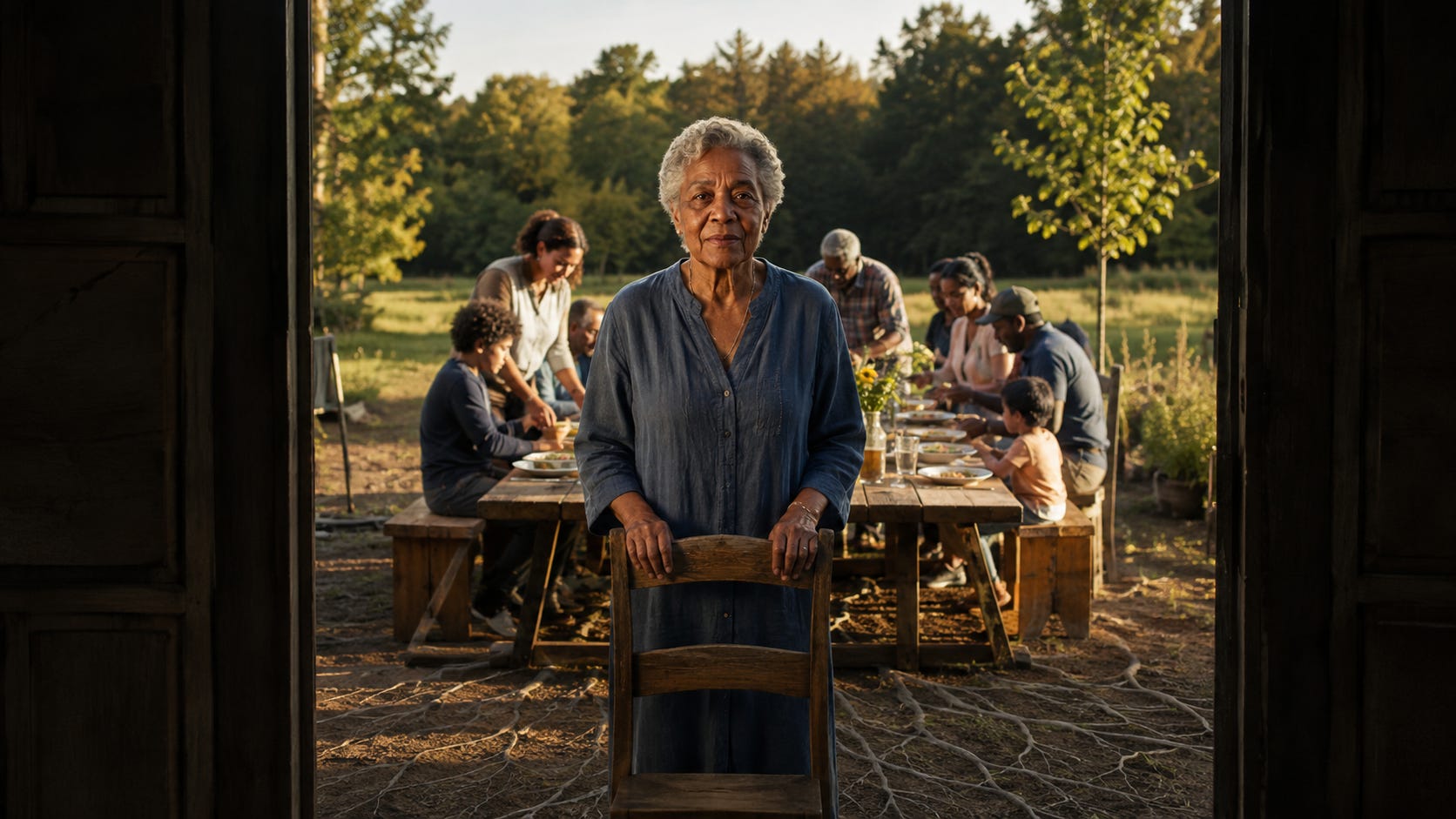
You are going to die.
I know, I know, that’s not exactly the sort of motivational opening that looks good stitched onto a throw pillow, but it’s quite likely the most important fact about your life, and one we are really going to stare at today so we can do it right. Intellectually, we understand that we’ll die; however, how many of you are living as if that were true?
Earnest Becker, in his capstone book, The Denial of Death, explains part of the challenge in that humans live inside a contradiction: We are animals, born into bodies that eat, reproduce, excrete, decay, and die, and yet we also possess consciousness. We can imagine eternity, create meaning, and recognize our own splendid uniqueness like an angel but struggle with being trapped in the body of an animal, a topic we explored in Sex, Poop, and Rock ‘n Roll.
Worse, we are animals who know exactly what happens to animals in the end yet cannot reconcile that with our aspirations. So, because that’s terrifying, we build psychological defenses against it, and we do everything we can to avoid it.

Avoidance
The extreme example of avoidance are influencers and ‘lifehack’ gurus like Bryan Johnson and his “Don’t Die” project, which aims for radical life extension which he views as an engineering problem in which massive financial investments are being made. As Ted Gioia describes Bryan:
…spends $2 million per year on body rejuvenation. He’s now getting fountain-of-youth injections (not approved by the FDA) that cost $25,000 per shot.
Want to know the kicker?
All of these bio-hacks, all of this goal of immortality, and he just announced he was diagnosed with autoimmune gastritis, a chronic condition where the immune system attacks the acid-producing cells in his stomach lining. This limits his uptake of iron and vitamin B-12 and has no cure. The double kicker is that it is very likely caused by all the tinkering he did that our body is not adapted for.
Atul Gawande’s book Being Mortal goes beyond individual avoidance and explores what happens when our denial of death combines with a medical system designed to solve problems. Medicine can defeat infections, repair shattered bones, replace failing joints, and restart a stopped heart and these are incredible accomplishments, but they also train us to see death as a solvable medical problem.

What this looks like is that instead of awareness, mobility, comfort, time at home, and time with family, loved ones are locked in a hospital room for another procedure, offering a little possibility of additional days of life later. Except, Atul points out a 2010 study from Massachusetts General Hospital where lung cancer patients who received early palliative and hospice discussions lived 25% longer while experiencing significantly less pain and higher quality of life than those who ‘fought’ till the end.
The cost is also social. The aging population is now the largest driver of America’s growing dependence on government spending, particularly Social Security and Medicare. Did you know that the US government spends roughly four times as much on each senior as it does on each child? This is a complex subject Hermes of the Threshold described as the Nursing Home Economy, where:
Modern America has a really schizophrenic approach to aging - first, it is entirely youth obsessed and the elderly are ignored and hidden far away from the media spotlight. Second, even though the elderly are out of the media spotlight, they are generally desperate to live for as long as they can, to take every breath they can, because they are secular, materialist, and terrified of death and the possibility of the Void; the boomers are ready, willing and able to stack on unlimited debt so they can live a little longer
We saw this in COVID, where we locked kids out of schools to protect people who were in nursing homes. To be clear, this isn’t an argument for abandoning the elderly, but it does highlight a quandary our culture would rather avoid: How much of the future should be consumed trying to preserve the present?
Die Like a Boss
This is where we get to the “boss” part. Here, I’m using the term in lieu of “badass,” but even the association with management still works because that’s really what we’re doing. Managing our lives, managing ourselves, and managing our affairs. We explored a similar topic in Lead as if You Won't Survive the Engagement, where we have to look outside of ourselves to find the best way to manage.

And the badass part is that we are doing this because we’ve ditched the “I” ego and look at it all with an “Us” ego.
This is exactly what recent research is showing with the use of psychedelics in terminal cancer patients, where just one or two doses of psilocybin produce rapid, significant relief from end-of-life distress for roughly 80% of terminal patients. Even more interesting, ~60% achieve complete clinical remission from depression and anxiety, lasting six months or longer. Even cooler, almost 85% of participants reported a permanent reduction in their fear of death coupled with a renewed sense of meaning and peace.1 This is because one of the key tenets of psychedelics is the destruction of your ego.
In the idea of a soul journey we’ve explored previously, I think all the ‘hacking’ and avoidance is the sign of a young soul. Bryan’s got a cheat code, taking himself to another level but without maturing from the “I” ego to the “Us” Ego. It’s all about him, and death is something to avoid, however inevitable. This is another reason why I love the idea of a soul journey because in that model, death is not something to avoid, but to embrace as the culmination of this incarnation, the ability to learn and the opportunity to continue growing. Even if I it’s not true, I live as if it might be and that means, I’m doing something right.2

This is where we get to the core element of this exploration because we can’t defeat death by preserving the self. We defeat it in the only sense available to mortals, which is by transferring the self. This transfer happens through a series of mechanisms.
We transfer ourselves biologically through our children
We transfer ourselves culturally through our stories, art, inventions, and traditions
We transfer ourselves socially through the people we teach and mentor.
We transfer ourselves materially through the resources and institutions we leave behind.
We transfer ourselves spiritually through the character, courage, and moral example we cultivate in others.
This connects directly to the Two Rules of Life. The first rule of evolutionary biology is reproduction and resource creation while ensuring you raise future generations to succeed. The second, soul maturation, demands the ego to grow from “I” toward “Us.”
And death is the final test of both.
Did you create and nurture life? Did you produce resources that helped life continue? Did you mature beyond your own appetites and anxieties? Did you prepare others to carry forward what mattered?
Back to Ted and his article, How to Achieve Immortality, where he connects back to the ancient pursuit of immortality via great deeds and enduring art. Shakespeare remains alive through his words without requiring frozen organs, teenage blood, or a pharmaceutical routine that resembles a part-time job like Bryan.
But you don’t have to be Shakespeare because most genuine legacy is anonymous. We carry genes, habits, recipes, skills, sayings, rituals, and moral intuitions inherited from countless, nameless people. They might not be remembered, but their legacy remains, virtually immortal, and the future is different because they lived.
Counterintuitively, you must embrace your mortality to achieve this immortality. So, how do we do this?
Taking Action
The first thing to do is to accept what Charlotte Grinberg, MD described in The Free Press article Ancient Wisdom: How to Die Well:
We must learn to hold two truths at once: to wish things were different, while accepting what is. Modern medicine is incredible, and it continues to advance our lifespans and health spans. Yet we should acknowledge that death is still inevitable, and these very same medical advances may also deepen our collective denial of death.
Therefore, I propose a few steps that help us do just that:
Face your death: Think about it before you’re forced to and, even better, write what would remain unresolved if you died tonight. Also, imagine the decline that precedes death, and you’ll find it becomes less scary when it becomes familiar.
Define what makes life worth living: Identify the abilities and relationships that matter most. You get to decide what suffering and dependence you would accept for a realistic chance of preserving those things. Sometimes it’s as silly simple as eating chocolate ice cream and watching football, as was one of Gawande’s examples in his book.
Make decisions now: Don’t ignore the documents and choose a healthcare proxy, complete an advance directive, prepare a will, identify beneficiaries, and document passwords, financial records, and funeral preferences. Simply put, Lead as if You Won’t Survive the Engagement, because you won’t survive.
Talk about it: Tell your family what you value, what you fear, and what tradeoffs you would accept. Don’t just hand them those legal documents. Give them enough understanding to make decisions when things go sideways.
Build a medical off-ramp: Palliative care can begin alongside treatment, and that helps align medicine with your priorities. Hospice helps when comfort becomes more important than attempting a cure. Resources like chaplains, counselors, or Death Doulas (yes, a real and useful thing) can help ensure a human presence that institutional medicine often struggles to provide.
Transfer while you’re alive: Give resources when you can see what they create. Teach skills instead of leaving instructions. Mentor your successor, share authority, pass on the family stories. Focus on the “Us” ego.
Settle your non-financial accounts: Offer the apology, express the gratitude, forgive where you can, and say what needs to be said while someone is still alive to hear it. Your family shouldn’t have to inherit your emotional debts.
Let your legacy evolve: This is probably the biggest thing to let go of with your “I” Ego because your children, students, readers, and successors aren’t there to preserve you like a memory mummy. You need to give them the freedom to improve, reinterpret, and even reject what you handed them. An “Us” legacy makes other people more capable.
Take care of yourself: It’s not all about death. Something as simple as Functional Fitness can improve your living moments, extend your life, and allow graceful degradation, not medicalized life support.
You will die. Your body will stop, your position will be filled, and the world will keep turning. The question is whether you’ll spend your remaining life trying to prevent that world from continuing without you, or preparing it to continue because of you. This is why I found what Andrew Perlot recommends in Don’t Fancy Dying? Cicero Has Ideas, where he reminds us of ancient wisdom:
“‘Rehearse for death’: he who says this is telling us to rehearse our freedom. One who has learned death has unlearned slavery…” — Seneca, Letters, 26.10
Stare death in the eyes and decide what matters. Grow from the “I” ego to the “Us” ego and identify your true legacy. Prepare the people you love and transfer what you’ve learned. Embrace mortality to achieve immortality and then, when the time comes, let go and die like a Boss.
What’s something you’ve realized you’re hanging on to that you need to let go of?
What’s something you’ve decided you want to transfer into your legacy?
Did you enjoy this post? If so, please hit the ❤️ button above or below. This will help more people discover Substacks like this one, which is great. Also, please share here or in your network to help us grow.
Polymathic Being is a reader-supported publication. Becoming a paid member keeps these essays open for everyone. Hurry and grab 20% off an annual subscription. That’s $24 a year or $2 a month. It’s just 50¢ an essay and makes a big difference.
Further Reading from Authors I Appreciate
I highly recommend the following Substacks for their great content and complementary explorations of topics that Polymathic Being shares.
Goatfury Writes All-around great daily essays
Cyborgs Writing Highly useful insights into using AI for writing
Educating AI Integrating AI into education
Mostly Harmless Ideas Computer Science for Everyone
The Shepard Scale - Kit Perez - Counter Intelligence Insights
My 2 Cents - Karina Schneidman MBA, MS-MFT
Supporting Sources Include:
[Griffiths, R. R., Johnson, M. W., Carducci, M. A., Umbricht, A., Richards, W. A., Richards, B. D., Cosimano, M. P., & Klinedinst, M. A. (2016). Psilocybin produces substantial and sustained decreases in depression and anxiety in patients with life-threatening cancer: A randomized double-blind trial. Journal of Psychopharmacology, 30(12), 1181–1197. doi.org]
[Ross, S., Bossis, A., Guss, J., Agin-Liebes, G., Malone, T., Cohen, B., Mennenga, S. E., Belser, A., Kalliontzi, K., Babb, J., Su, Z., Corby, P., & Schmidt, B. L. (2016). Rapid and sustained symptom reduction following psilocybin treatment for anxiety and depression in patients with life-threatening cancer: A randomized controlled trial. Journal of Psychopharmacology, 30(12), 1165–1180. doi.org]
[Sweeney, M. M., Nayak, S., Hurwitz, E. S., Mitchell, L. N., Swift, T. C., & Griffiths, R. R. (2022). Comparison of psychedelic and near-death or other non-ordinary experiences in changing attitudes about death and dying. PLOS ONE, 17(8), e0271130. doi.org]
Religious folks are often stuck in the “I” ego. Descriptions of God and Heaven reflect a God with an “I” Ego as well. Christians describe a God who created this world, puts hairless monkeys on it, and gives them cognition for the sole purpose of glorifying himself as long as they are born in the right region/family to know he exists. Of those who know of his existence, they must believe the right thing, and if they don’t, they burn in hell for eternity because they scorned him, but if they do, they go to heaven where they glorify him for all of eternity. That’s a God manifest from an “I” ego. I feel the Journey of Souls idea reflects the “Us” ego better, as we are all together on this adventure, all learning to mature and return to the source, not to glorify it, but to grow it. Doing that requires destroying my “I” ego.
I hate that whole ‘fighting cancer’ thing - as though death is a failure you could have avoided if you had fought harder. I prefer ‘living with cancer’. And now I will go back and read more. This is excellent.