


Welcome to Polymathic Being, a place to explore counterintuitive insights across multiple domains. These essays explore common topics from different perspectives and disciplines to uncover unique insights and solutions.
Today’s topic is a quick reminder to slow down and appreciate the complexity of the world around you. It’s a great antidote to misery and doesn’t require anything special. We’ll introduce a simple technique that can help you find awe in almost anything.
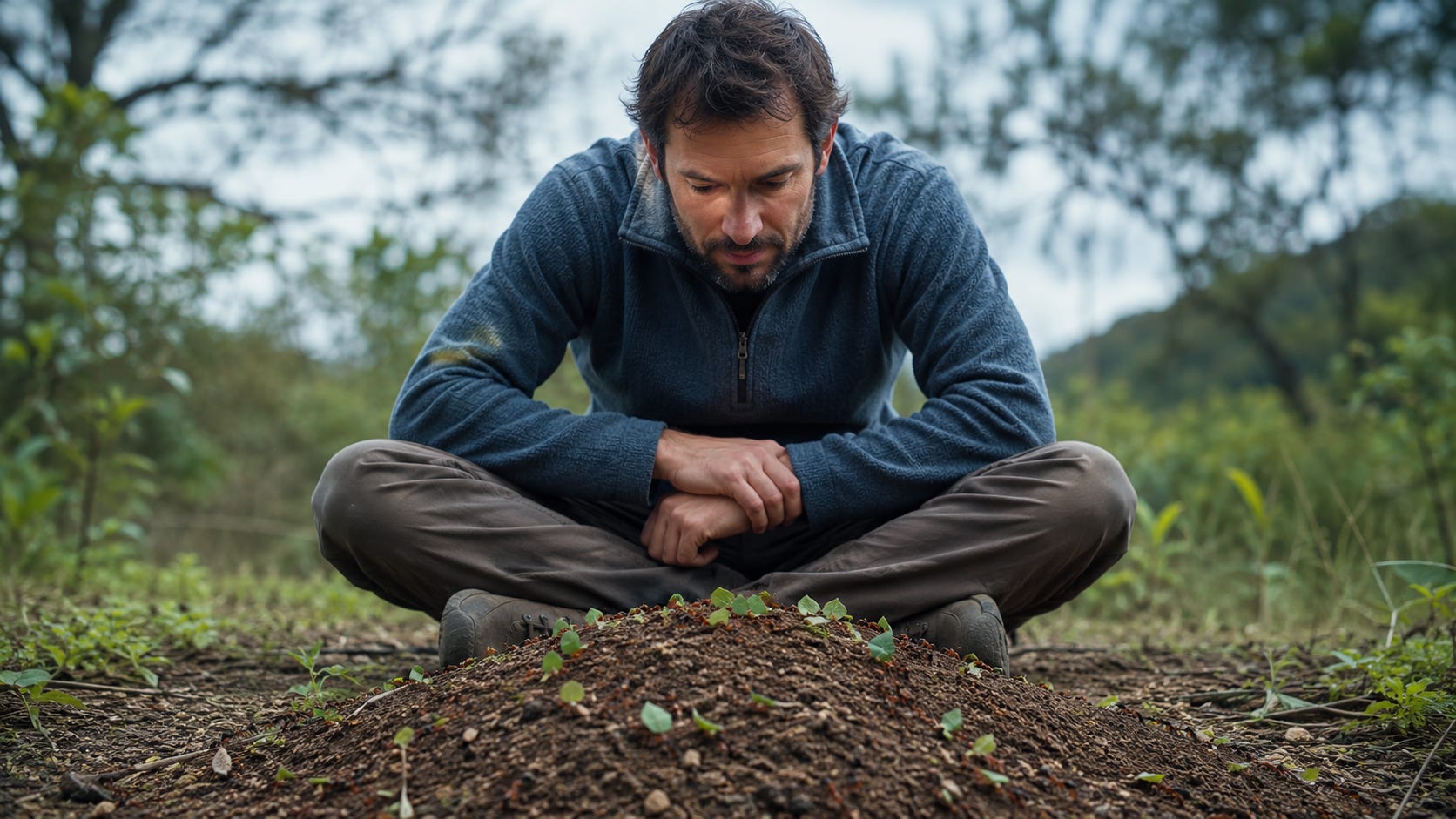
When was the last time you felt Awe? Like truly marveled at something that showed the beauty, complexity, and even rawness of life?
Too often, we pass right by millions of things that are awe-inspiring while tending to focus on the things that matter least. Like what a politician said thousands of miles away, or what a social media influencer thinks, thought, or did. Or worse, the invention of things to fear that have no bearing on reality, as Seneca the Younger said 2000 years ago:
“We suffer more in imagination than in reality.”

Thankfully, I’ve been introduced to a cohort of thinkers and writers here on Substack who leave me in awe. One of them, whom I mention often, is Sam Alaimo who recently wrote: “How to Find Awe In Everything.” I left a comment that I want to build on today:
I find that awe happens slowly, not quickly. I find myself appreciating the tiniest things when I slow down long enough to see them. I've never felt awe at a sprint.

First, let’s touch back on the intro because it’s not even the speed at which we move that pushes us to overlook awesome things. Perversely, social media has taken to scorning awe as somehow infantile or, worse, ‘tone deaf’ to what they see as endemic suffering. Ironically, that behavior is the second of the 10 Commandments for Misery Andrew Perlot and I explored before:
2) Thou Shalt Scorn Awe
You must never experience awe on the road to misery. You get extra points for constantly denigrating the awe of someone else. The trick is to always be irreverent while demanding reverence for your own irreverence.

Obviously, the title contains the answer to how successful eschewing awe really is. It’s also just a miserable look, as evident in many people mocking Europeans who came over for the World Cup and were in awe at what we consider normal. Common things like gargantuan stadiums that hold tens of thousands of fans, massive freeways that transport millions, ridiculous gas stations like Buc-ee's, with over 100 gas pumps and a massive convenience store with one of the best brisket sandwiches around.
But we drive by that every day and don’t even consider just how amazing it all is. It’s also worse than that because while we aren’t even awed by the awe-inspiring extremes of consumerism or nature, we’re overlooking so much below that which can still inspire awe. Thankfully, we can rediscover awe in some of the simplest things that surround us.
Rediscovering Awe
Start by slowing down.
Getting back to that comment, I find that awe happens slowly, not quickly. I find myself appreciating the tiniest things when I slow down long enough to see them. I’ve never felt awe at a sprint. This is important because the world is demanding our attention in a thousand different ways, and the best thing to do is just push them away and focus on something super simple, like this Gorilla, and his son intently watching a simple caterpillar.
I find that watching an anthill does the same for me. Find a quiet space with an anthill, and just stop and watch them. Consider their industriousness, relentless effort, and sophisticated command and control for the entire nest.
Same for flowers. Just deeply observing their colors, textures, and the way they move in the breeze, and the types of insects that come by.
Spider webs are similar. Even if they’re not active, just looking at how intricate the web is, how it moves, tracing the gossamer strands to see where they attach it and considering how they did that in a single night.
When you can find awe in the micro, then it also helps to find it in the macro. Not just in massive vistas or beautiful mountains, but in the complexity of humanity as we explored in The Awe of Sondering, where we learned a new word for many of us:
Sondering: The profound realization that every random passerby is living a life as vivid and complex as your own, filled with their own stories, struggles, and history, even though they seem like background characters in your life.

Just stepping back and considering that the people you zip by each day have lives as complex as your own, and then considering what you’re dealing with, is a wonderful way to depressurize the anxiety that constantly threatens to overwhelm us. Even better, you realize that there’s almost nothing going on out there that matches what we’re told is happening online.
The same thing can happen when you do sit on the lakeshore, or the mountain, or deep in the woods, surrounded by a mass of other things that, as you start to zoom from the macro to the micro, and back, is frankly awe-inspiring.
It can happen within nature or deep in a city because there’s always something big or something small that you can focus on that helps you slow down and get out of your own brain, where it’s hard not to find awe.
Take a moment, go find something to focus on. Spend 10 minutes just considering the complexity of the micro and/or the magnitude of the macro.
Slow down, and let the world keep moving.
Let yourself be amazed at what you find, the tiniest details or massive majesty.
Intentionally find awe and feel what it does to your brain.
Now, see if you can find awe in almost anything.

So, what did you find? What did you find awe in? Leave a comment; I’d love to hear!
Did you enjoy this post? If so, please hit the ❤️ button above or below. This will help more people discover Substacks like this one, which is great. Also, please share here or in your network to help us grow.
Polymathic Being is a reader-supported publication. Becoming a paid member keeps these essays open for everyone. Hurry and grab 20% off an annual subscription. That’s $24 a year or $2 a month. It’s just 50¢ an essay and makes a big difference.
Further Reading from Authors I Appreciate
I highly recommend the following Substacks for their great content and complementary explorations of topics that Polymathic Being shares.
Goatfury Writes All-around great daily essays
Cyborgs Writing Highly useful insights into using AI for writing
Educating AI Integrating AI into education
Mostly Harmless Ideas Computer Science for Everyone
The Shepard Scale - Kit Perez - Counter Intelligence Insights
My 2 Cents - Karina Schneidman MBA, MS-MFT
“I've never felt awe at a sprint.” Wait until you’re 79. You’ll feel awe at sprints.
Great reminder. I’m lucky to live in the mountains of Idaho and I backpack into those mountains regularly. A favorite pastime is lying on my back at night soaking in the billions of stars arrayed above me. It puts my life and the life of our planet in perspective. Thank you for the reminder.
I had this feeling recently while on the subway. Although I thought about pointing out how many people exist with completely independent lives and thoughts and ideas about the world. Mainly to other people but thought about it myself as well.