


Welcome to Polymathic Being, a place to explore counterintuitive insights across multiple domains. These essays explore common topics from different perspectives and disciplines to uncover unique insights and solutions.
Today’s topic explores an old axiom of mine and how that ties into the core philosophy of Polymathic Being. The goal is to improve our ways of thinking, open ourselves to new information, and to truly learn how to be right in our search for truth.

One of my core axioms is “Don’t be disprovable.”
The twist is that this doesn’t mean I have to be right.
There’s a nuance there because it typically leads me to being right more often than otherwise because, counterintuitively, I’m not worried about being wrong.
Okay, okay, that hurts my own brain. Let me break this down:
What not being disprovable means is that I’m the first person to critique my own ideas, and that pushes me to stress test my ideas before blithely accepting them as right. It also means I’ve learned how to decouple my identity from my ideas so that being wrong doesn’t challenge who I am, avoiding what Kit Perez calls “Identity Protective Systems which she described recently as:
“It’s when a belief becomes part of who you are, or part of the group you belong to. Your reasoning will shift from finding the truth to defending your belief. Instead of weighing the evidence, you’re guarding a piece of yourself.”
These identity-protective systems shield bad ideas from critique and fuel an insatiable drive to feed a rage-bait-driven algorithm regardless of the facts. As such, decoupling information from how I define my identity helps me navigate life more effectively.
Let’s use a quick example: Climate Change
It doesn’t take a lot of evaluation to see that climate change is much less about the actual science of the climate and much more about political and ideological identity and signaling.1 Key to note is the dearth of discussion about which conditions have represented the greatest planetary thriving in biodiversity throughout history. (fun fact: it’s higher temps and higher CO2)

And if that statement was triggering, that’s exactly what I’m talking about. A large part of that is that we only talk about avoiding change, and that change is assumed to be de facto bad mostly because humans have a natural inclination to avoid change.2
Well, I know we have this inclination, and so I’m curious about the biology, entomology, geology, and more about the topic. As I investigated, without fearing climate change, I observed that the planet has generally had greater and more prolific biodiversity under conditions that current climate alarmists claim are deadly. Note that I don’t claim to add a moral dimension of ‘could’ or ‘should,’ but I’m curious to understand ‘why.’ Why do warmer temps and greater CO2 lead to more biomass and biodiversity?3
This query uncovered that CO2 is a fertilizer. So much so that commercial greenhouses pump in tons of CO2 to help their plants grow faster with increased yield.4 In fact, 10% of the yield increase in staple crops like corn and wheat is due to increased CO2, and almost 70% of the planet's vegetated land surface experienced active greening.5 You may or may not know that this is because all plants, all of their mass, is built from CO2, extracted from the atmosphere by photosynthesis, with trace minerals and water coming from the soil. So, if increasing atmospheric CO2 increases plant biomass, then what is the consequence of reducing CO2?
Well, the last ice age showed a few indications when CO2 levels were so low that plants nearly suffocated,6 and as temps and CO2 increased, we’ve seen dramatic greening. This opens another thread on temperature: the climate is both emerging from an ice age and dynamic. The compounding causal chain of increased temperature is fundamentally so complicated that it’s only recently that computers have been powerful enough to compute a fraction of it. Most models lock all but a few variables, so their outputs look severe but rarely match reality.7
Now, this is where it gets interesting because the right answer isn’t confidence in an ideology, but insatiable curiosity to delve deeper and wider. These facts aren’t attempting to dismiss climate concern, deny climate change, or dissuade action, but to demand that we have the proper context, facts, data, and understanding. This ensures that our actions actually have the impact we want, rather than the common outcome of greenwashing, and addresses the challenges we face, where even recycling has a dirty secret because of feelings over facts.

This is why the polymathic mindset I embrace balances these three things:
Let me reiterate here that my goal isn’t to be “right”; it’s to not be disprovable because the deeper you get into the science of climate change, the more you realize two things: First, the science is certainly not settled and, second, our knowledge of the climate is still nascent, and we’re still applying simple analytic tools to a highly complex and adaptive system.

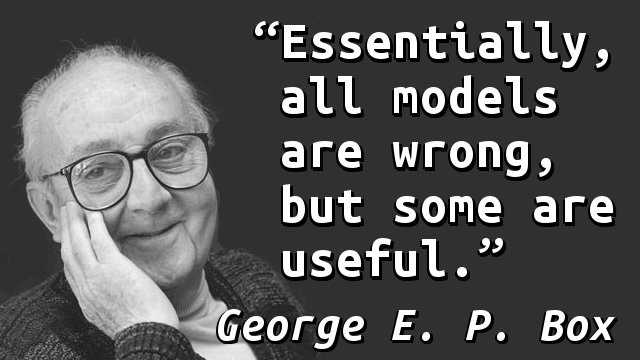
So, am I right? Well, in the world of science, it helps to remember British statistician George Box’s famous line:
“Essentially, all models are wrong, but some are useful.”
It’s a great reminder that no scientific model can capture the full truth of the real world. That doesn’t mean they aren’t useful, as a simple model can still help us solve problems, make good guesses, and understand how things work. However, we, too often, suffer the fallacy of composition when we assume what is true of a part must automatically be true of the whole, which is what’s happening in spades in the climate conversations, which are then weaponized by politics and moral language.
In the end, we’re all wrong.
If you’ve been reading Polymathic Being for a while, you’ll see we take this approach with almost every topic that we explore. From Feminism to the Patriarchy, from Polio to Skin Cancer, from Leadership to Innovation, and from Religion to Myths, the goal here isn’t to be right. It’s first and foremost an effort to prove ourselves wrong and, in doing so, avoid being disprovable.
Weaving in a final concept we’ve looked at before, being right isn’t just about learning something new but about a critical focus on unlearning what no longer works and relearning new positions. Let’s break this down and weave it together.
Learn - Driven by that insatiable curiosity, the goal is to constantly explore. As I coach others, I intentionally look across domains and disciplines to see what new information is out there and how others are approaching similar problems. I found out CO2 was a fertilizer from the Department of Agriculture, not the Environmental Protection Agency.
Unlearn - Undescored by humility, we have to recognize when old models are too wrong to keep using and remove them from the equation. This is something that Thomas Kuhn would describe as shifting your paradigm and forces you to analyze and, hopefully, decouple yourself from rote adherence to old systems. This also helps us critique moral statements from base facts. A critical conflation that permeates climate science is the unwillingness to unlearn.
I need to caveat here that this isn’t throwing out the baby with the bathwater. Sometimes, it’s just clipping something you thought was important and seeing if anything even changes. So much of what we hold tightly doesn’t need to be.
Relearn - If you’ve already thought about how intentional reframing fits here, you’re right. Sometimes, it’s just rotating our perspective and recognizing that other views and interpretations exist. This is why Steelmanning is such a powerful critique because, instead of trying to prove someone else wrong, you try to make their argument better than they can. Similarly, you apply critique to your own arguments to challenge and keep yourself open to challenge.

With these two frameworks woven together, we’re now armed to reconsider almost anything. Back to climate change, this doesn’t mean we just switch from one extreme to another but actually consider avoiding the binary completely. For example, I like to play a thought game where I call myself a ‘climate change advocate,’ and I embrace both the increase in temperature and CO2.
What then?
Well, now you’ve unlocked a powerful tool that the Stoic philosopher Epictetus frequently used throughout The Discourses to challenge his students' assumptions and bring them back to the core dichotomy of control. But truly, what then?
What do increasing temps and CO2 do to our perceptions of geopolitics? Why do most debates end up talking economics, and not bioscience? On a dynamic planet, why is the debate over whether something should, or shouldn’t, change? Why did we pick the baselines we’re even arguing over? What if we did nothing?
What then?
When you apply curiosity, humility, and reframing with learning, unlearning, and relearning, you’ll be amazed at how interesting those questions really are. You also realize how many elements of the topic you hold dear that don’t need to be. Done well, you’ll also learn you don’t have to be “RIGHT!” When you get to that point, you’ll find yourself less disprovable, less wrong, and more open to new information.
That’s the best place to be and is certainly never wrong.
What’s fun is how this essay was pulled from my drafts after a random Tuesday tag in Substack Notes with a continuation poem. The goal was to take the last line and build a new stanza. The one Thirty Poems tagged me to build from was: "Until the hour that my grip on life eases.” The first thing that popped into my brain was learning, and the poem flowed from there:
Until the hour that my grip on life eases

I will strive to learn—

To chisel ossified truths from my bones

And test them against a world still shifting,

To unlearn the walls I called foundations,

Then relearn how to stand among the rubble,

Keeping only what can still bear my weight

And letting wisdom grow from what I lose... and learn.
This is how to be right. Counterintuitively, it’s more about not being wrong while also challenging everything you think to be right. It’s insatiable curiosity, humility, and intentional reframing wrapped into the mantra of Learn, Unlearn, and Relearn.

Did you enjoy this post? If so, please hit the ❤️ button above or below. This will help more people discover Substacks like this one, which is great. Also, please share here or in your network to help us grow.
Polymathic Being is a reader-supported publication. Becoming a paid member keeps these essays open for everyone. Hurry and grab 20% off an annual subscription. That’s $24 a year or $2 a month. It’s just 50¢ an essay and makes a big difference.
Further Reading from Authors I Appreciate
I highly recommend the following Substacks for their great content and complementary explorations of topics that Polymathic Being shares.
Goatfury Writes All-around great daily essays
Cyborgs Writing Highly useful insights into using AI for writing
Educating AI Integrating AI into education
Mostly Harmless Ideas Computer Science for Everyone
The Shepard Scale - Kit Perez - Counter Intelligence Insights
My 2 Cents - Karina Schneidman MBA, MS-MFT
Supporting Sources on Politics vs. Science Include:
Kahan, D. M., Peters, E., Wittlin, M., Slovic, P., Ouellette, L. L., Braman, D., & Mandel, G. (2012). The polarizing impact of science literacy and numeracy on perceived climate change risks. Nature Climate Change, 2, 732–735. https://doi.org/10.1038/nclimate1547
Hornsey, M. J., Harris, E. A., Bain, P. G., & Fielding, K. S. (2016). Meta-analyses of the determinants and outcomes of belief in climate change. Nature Climate Change, 6, 622–626. https://doi.org/10.1038/nclimate2943
Druckman, J. N., & McGrath, M. C. (2019). The evidence for motivated reasoning in climate change preference formation. Nature Climate Change, 9, 111–119.
https://doi.org/10.1038/s41558-018-0360-1Kotz, J., et al. (2026). Ideological polarization on anthropogenic climate change is stronger among politicians than among citizens across eight countries. Communications Sustainability. https://doi.org/10.1038/s44458-026-00113-y
Sources on the Psychology of Change Avoidance:
Samuelson, W., & Zeckhauser, R. (1988). Status quo bias in decision making. Journal of Risk and Uncertainty, 1, 7–59. https://doi.org/10.1007/BF00055564
Kahneman, D., Knetsch, J. L., & Thaler, R. H. (1991). Anomalies: The endowment effect, loss aversion, and status quo bias. Journal of Economic Perspectives, 5(1), 193–206.
https://doi.org/10.1257/jep.5.1.193Eidelman, S., & Crandall, C. S. (2012). Bias in favor of the status quo. Social and Personality Psychology Compass, 6, 270–281. https://doi.org/10.1111/j.1751-9004.2012.00427.x
Lang, C., Weir, M., & Pearson-Merkowitz, S. (2021). Status quo bias and public policy: Evidence in the context of carbon mitigation. Environmental Research Letters, 16(5), 054076. https://doi.org/10.1088/1748-9326/abeeb0
Increased Biomass Source:
Mayhew, P. J., Bell, M. A., Benton, T. G., & McGowan, A. J. (2012). Biodiversity tracks temperature over time. Proceedings of the National Academy of Sciences, 109(38), 15141–15145. https://doi.org/10.1073/pnas.1200844109
Supporting Sources on CO2 Supplementation:
Ainsworth, E. A., & Long, S. P. (2005). What have we learned from 15 years of free-air CO₂ enrichment? A meta-analytic review of the responses of photosynthesis, canopy properties and plant production to rising CO₂. New Phytologist, 165, 351–372.
https://doi.org/10.1111/j.1469-8137.2004.01224.xLeakey, A. D. B., Ainsworth, E. A., Bernacchi, C. J., Rogers, A., Long, S. P., & Ort, D. R. (2009). Elevated CO₂ effects on plant carbon, nitrogen, and water relations: Six important lessons from FACE. Journal of Experimental Botany, 60, 2859–2876.
https://doi.org/10.1093/jxb/erp096Wang, A., Lv, J., Wang, J., & Shi, K. (2022). CO₂ enrichment in greenhouse production: Towards a sustainable approach. Frontiers in Plant Science, 13, 1029901.
https://doi.org/10.3389/fpls.2022.1029901Oklahoma State University Extension. (n.d.). Greenhouse carbon dioxide supplementation. https://extension.okstate.edu/fact-sheets/greenhouse-carbon-dioxide-supplementation.html
Ontario Ministry of Agriculture, Food and Rural Affairs. (2000, September). Carbon dioxide enrichment in greenhouses (Fact Sheet 00-077). http://omafra.gov.on.ca/english/crops/facts/00-077.htm
Supporting sources on Greening include:
Anniwaer, N., Zhu, D., Gui, Y., Huntingford, C., Myneni, R. B., & Piao, S. (2026). Vegetation greenness in 2025. Nature Reviews Earth & Environment, 7, 209–212. https://doi.org/10.1038/s43017-026-00776-0
Hansen, K. (2020, February 18). Global green up slows warming. NASA Earth Observatory. https://science.nasa.gov/earth/earth-observatory/global-green-up-slows-warming-146296/
Hille, K. B. (2016, April 26). Carbon dioxide fertilization greening Earth, study finds. NASA. https://www.nasa.gov/centers-and-facilities/goddard/carbon-dioxide-fertilization-greening-earth-study-finds/
Keenan, T. F., et al. (2023). A constraint on historic growth in global photosynthesis due to rising CO₂. Nature Climate Change, 13(12), 1376–1381. https://doi.org/10.1038/s41558-023-01867-2
Lobell, D. B., & Di Tommaso, S. (2025). A half-century of climate change in major agricultural regions: Trends, impacts, and surprises. Proceedings of the National Academy of Sciences, 122(20), e2502789122. https://doi.org/10.1073/pnas.2502789122
Zhu, Z., et al. (2016). Greening of the Earth and its drivers. Nature Climate Change, 6(8), 791–795. https://doi.org/10.1038/nclimate3004
Ice Age Impact Sources:
Gerhart, L. M., & Ward, J. K. (2010). Plant responses to low [CO₂] of the past. New Phytologist, 188, 674–695. https://doi.org/10.1111/j.1469-8137.2010.03441.x
Cerling, T. E., Ehleringer, J. R., & Harris, J. M. (1998). Carbon dioxide starvation, the development of C₄ ecosystems, and mammalian evolution. Philosophical Transactions of the Royal Society B, 353, 159–171. https://doi.org/10.1098/rstb.1998.0198
Sources on Modeling Analysis:
Hausfather, Z., Drake, H. F., Abbott, T., & Schmidt, G. A. (2020). Evaluating the performance of past climate model projections. Geophysical Research Letters, 47, e2019GL085378. https://doi.org/10.1029/2019GL085378
Papalexiou, S. M., Rajulapati, C. R., Clark, M. P., & Lehner, F. (2020). Robustness of CMIP6 historical global mean temperature simulations. Earth’s Future, 8, e2020EF001667. https://doi.org/10.1029/2020EF001667
Argüeso, D., Evans, J. P., & Fita, L. (2013). Precipitation bias correction of very high resolution regional climate models. Hydrology and Earth System Sciences, 17, 4379–4388.
https://doi.org/10.5194/hess-17-4379-2013
Two things:
First, preserving self-identity is absolutely one of the strongest psychological motivations we have (I got Summa thanks to a thesis on it). The more an individual can be aware of that, the more they can control their own reactions and life. My top examples are “I’m a victim” (yep, and you will be until you change that identity), both “I’m not smart” and “I’m very smart” (a common misreading of actual capabilities), and “I’m not attractive” (because poor self-confidence is what makes people unattractive more than their physical appearance, and so that’s a trap).
Second, climate change, something I’ve been into the depths of since the 90s due to my satellite work. As I’ve told people frequently: There is no question that the Earth will survive. Life will survive. Humans will survive. The questions are what it will take for human civilization to adapt, and we may not like many of those answers.
Specifically, as the climate changes, where you can grow various types of crops changes. That alters a ton of geopolitics and economics. Another is water flow. You and I both live off the Colorado River (I think you’re in Phoenix rather than Tucson). We are not going to see the regular flows that were used to set the compact and also expanded our populations upon. So… whose farmers go out of business? My vote is that we let the Arizona cotton farms shrivel up. You may have a different perspective.
Biodiversity may increase in a hotter, more CO2 heavy climate, but getting there is gonna be a hard for a lot of the population.
As for the politics of “stopping it” (too late), my argument is a bit simpler. The dependence on fossil fuels drives most of our geopolitics these days. Maybe… we shouldn’t be so dependent?
How amazing it is to learn I am wrong! How unsatisfying it is to think I am right but not be entirely sure. Science is the search for true positive statements. I love your article Unsettling Science. If only I could get my students to read it and understand it.