


Welcome to Polymathic Being, a place to explore counterintuitive insights across multiple domains. These essays explore common topics from different perspectives and disciplines to uncover unique insights and solutions.
Today’s topic directly addresses a critique of those who claim polymathy as their focus. We’ll explore how to balance the ego of titles, the hubris of credentials, and uncover the truth of polymathy and its value in solving wicked problems.

First off, I want to acknowledge a common complaint regarding the title of Polymath, and that is the perception of ego that goes with it, especially pertaining to the audacity of claiming competence in multiple different domains or disciplines.
To be fair, the more I’ve embraced the aspiration of becoming polymathic, the more I’ve run into people who claim it and yet unsettle me with their use of the term to excuse focus, inflate ego, or claim status. Even a key contributor to these pages, Kit Perez recently told me, “At this point, when I see people calling themselves one, I instantly assume “bloviating jackwad” (Although, to be fair, your Substack was the first I ever heard of the term, sooooo that’s why you get a pass. You’re the OG. lol).”
Clearly, I’ve got some bad publicity to overcome… even from fans.
I think part of this branding stems from how many other cringeworthy titles are out there, especially on LinkedIn, that obscure a core nugget of good, such as Visionary Thought Leader, Disruptive Thought Architect, Chief Innovation Evangelist, Cloud Ecosystem Ninja, Agile Transformation Guru, Synergy Strategist, Career Whisperer, and more. Core to most of these is a sense of ego, hubris, and self-promotion, while beneath the surface lies a banal reality of mediocrity.
The thing is, there’s not a better term for what I want to do. It’s not like hiding Garbage Collector under Sanitation Engineer, and there’s a reason why I aspire to be a Polymath: I think the world needs more systems thinkers who can tie together insights across domains and disciplines.
Sure, there are other descriptors for Polymathy, like Systems Engineering, Systems Architecture, and other technically focused terms, but my goal isn’t just to be technical; it’s to weave the human and social dimensions into technology. That’s why we study both the Keys to Innovation and Mixed Mental Arts in these essays, along with multiple other domains and disciplines. In the end, Polymathy is the simplest and most inclusive word that fits.
However, as we explored in this Substack’s inaugural essay, The Bane of Specialization, modern society favors hyperspecialization rather than the generalist, which means polymathy and the Systems Thinking that underpins it are not common disciplines. This is evident in my own employment, where I’m asked how I ground my capabilities in a focused discipline while, at the same time, they recognize that the value lies in not being focused on a single discipline.
Part of this is because, when it comes to personality proclivities, only 25% of the population is ‘wired’ for broader systems thinking, whereas 75% are more comfortable diving into the details. In practical terms, this means it’s very hard for 75% of the population to grok that others are more comfortable navigating broader systems.1

Adding to this quandary is a Catch-22: Intuitive people like me naturally understand and appreciate specialists. In fact, I can’t do what I do without the specialists. However, the specialists naturally expect the value to be deeper, not wider, and have a very hard time even understanding that, yes, I can have very broad exposure and see across domains and disciplines.
That doesn’t make me better, but it does make me useful, as so many systems are evolving from complicated through complex, and into wicked problem sets. To help articulate that progression, let’s step back to understand these systems:
The fundamental difference lies in their predictability and human alignment: complicated systems have many parts but are linear and predictable. This means experts can solve them with standard checklists (like building a rocket). Complex systems are dynamic and interconnected, meaning outcomes emerge unpredictably and require continuous experimentation to manage (like a stock market). Where it gets interesting is when we get into wicked systems, which combine complex dynamics with severe social or political disagreement, meaning they involve conflicting human values, have no single correct answer, and can never be fully solved, only mitigated (like climate change).
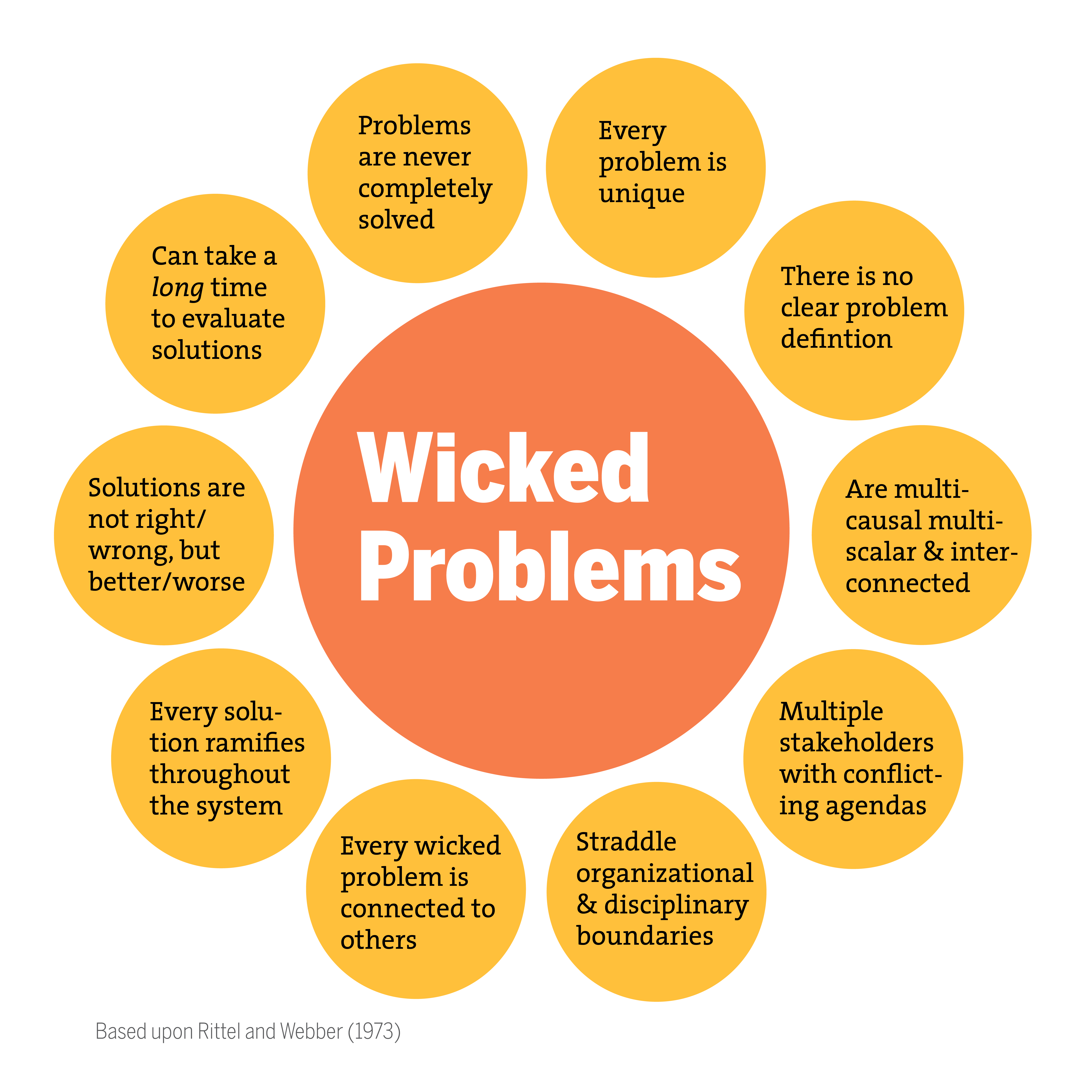
Complex and Wicked Problems stop benefiting from deeper and deeper expertise and start requiring a mindset that can begin to integrate deep experts. It’s not a binary one or the other, but an additive function, just like mechanical systems begin to integrate together into complex machinery with control systems.
Back to Polymathy, the original word is Polymathēs, which is interpreted as “very learned” or “having learned much.” But it’s more than that because “poly” means many, so a more literal definition is “learning across many topics.” Put another way, these were jacks of all trades that embraced three dimensions:
Breadth: serious engagement across multiple domains.
Depth: enough competence to understand and use what those domains contain.
Integration: connecting their concepts, methods, or perspectives productively.
The first and third dimensions are important because our modern experts are all around depth. Conversely, the polymath compliment that with Breadth and Integration, and there are many examples of the value of this kind of thinking:
In an experiment involving roofers, carpenters, and inline skaters, people from analogous fields generated solutions that were substantially more novel, although sometimes less immediately usable, than those produced by insiders. This is nuanced because outsiders often expand the solution space while specialists help make the solution work.2
An analysis of 17.9 million scientific papers found that the highest-impact work generally combined a conventional foundation with some unusual combinations of knowledge. Pure novelty performed less reliably than grounded recombination.3
A study of nearly 900 scientists and 32,000 papers found that interdisciplinary work received more citations while also taking longer and producing fewer publications. It was genuinely high-risk and high-reward.4
Nobel laureates are unusually likely to maintain serious artistic and craft practices outside their principal scientific disciplines. The relationship is correlational, although many reported using those pursuits to stimulate their scientific thinking.5
Clearly, there’s something important in what we are doing here that needs to be maintained while, at the same time, ensuring we remain grounded.

Ego
The main core of the opposition surrounds ego. One of the challenges is in the meaning of the word itself: “Having learned much.” Who am I to claim this? What proof do I have? It’s very hard to credentialize a broad exposure and workable knowledge across disciplines. The most common critique I get is that who am I to dare form an opinion on a variety of topics, a problem we explored in Who Are You to ____?, an essay that looks at the appeal to authority fallacy and addresses the difficulting in doing polymathy right.

It’s also important to understand that Polymathy doesn’t harbor more ego than any other discipline. It doesn’t take long in the ivory tower of siloed disciplines to find many bloviating jackwads who know nothing more than their tiny area and are still insufferable twats about it. It’s the same with any topic, whether it’s artists or authors, software engineers and scientists, or CEOs and content creators. In an irony not lost on me, it’s also ego to think someone like me, or any other aspiring polymath, can’t actually think in systems and has to be merely bloviating
But that’s not good enough for me, and so, to avoid ego, hubris, and self-promotion, I intentionally demand two things of polymathy:
It’s a journey, not an endstate. I’m an Aspiring polymath. That makes it a goal, not a title.
The central principle I espouse is Humility, which I place right between Insatiable Curiosity and Intentional Reframing.
These provide a constant reminder that people are watching me and judging me based on my claimed aspiration, and that I need to challenge my ego every step of the way.
And yes, I do struggle with this. On the one hand, I need to be able to speak clearly, and that means articulating with authority. On the other hand, I need to embrace the nuances of arguments, be adaptable in my thinking, and not make my knowledge my identity. Instead, I try to focus my identity on the aspiration for knowledge, and Polymathy is the best word to describe that aspiration. Hopefully, this inspires you to the same mindset as well!
Summary
Yes, there are bloviating jackwads claiming polymathy as an ego flex, just like many people try to flex their egos with other inflated claims. But, when the title is used to challenge ourselves to think differently, it’s at odds with the ego. I don’t aspire to polymathy because I have all the answers. Quite the opposite: I aspire because, to paraphrase Plato, “the only thing I know is that I know nothing.”
To wrap up a few threads here:
Breadth without depth becomes dilettantism.
Depth without integration becomes a collection of silos.
Integration without humility becomes bloviation.
It’s that last part that’s the most important to understand, and it's the opposite of what I challenge everyone here to embrace:
The Humility to accept you don’t have all the answers
Intentional Reframing to see if you understand the problem correctly.
This doesn’t stop me from writing about anything; it just means that as I write, I’m constantly challenging myself to avoid being a “bloviating jackwad.” It also doesn’t mean I won’t turn sacred cows into delicious thought burgers, nor does that mean I’ll pull any punches around political correctness or sensitive feelings on all sides. It just means I can do that with, hopefully, more skill and tact when appropriate. In the end, the problem with polymathy is solved by balancing the ego of titles, the hubris of credentials, and leveraging polymathy to help solve wicked problems.
“Jack of all trades and master of none; but more often better than a master of one.”
To date, there are over 200 essays in the archive, open to everyone, on a wide variety of topics. They’re also open to critique, and that critique has made my work better.
Becoming a paid member keeps these essays open for everyone. Hurry and grab 20% off an annual subscription. That’s $24 a year or $2 a month. It’s just 50¢ an essay and makes a big difference.
Did you enjoy this post? If so, please hit the ❤️ button above or below. This will help more people discover Substacks like this one, which is great. Also, please share here or in your network to help us grow.
Further Reading from Authors I Appreciate
I highly recommend the following Substacks for their great content and complementary explorations of topics that Polymathic Being shares.
Goatfury Writes All-around great daily essays
Cyborgs Writing Highly useful insights into using AI for writing
Educating AI Integrating AI into education
Mostly Harmless Ideas Computer Science for Everyone
The Shepard Scale - Kit Perez - Counter Intelligence Insights
My 2 Cents - Karina Schneidman MBA, MS-MFT
Here, I’m referring to the Myers-Briggs test between iNtuitive and Sensing, where iNtuitive people only make up 25% of the tested population, and it skews toward even less in STEM programs. More on personality proclivities here:

Franke, N., Poetz, M. K., & Schreier, M. (2014). Integrating problem solvers from analogous markets in new product ideation. Management Science, 60(4), 1063–1081. https://doi.org/10.1287/mnsc.2013.1805
Uzzi, B., Mukherjee, S., Stringer, M., & Jones, B. (2013). Atypical combinations and scientific impact. Science, 342(6157), 468–472. https://doi.org/10.1126/science.1240474
Leahey, E., Beckman, C. M., & Stanko, T. L. (2017). Prominent but less productive: The impact of interdisciplinarity on scientists’ research. Administrative Science Quarterly, 62(1), 105–139. https://doi.org/10.1177/0001839216665364
Root-Bernstein, R., Allen, L., Beach, L., Bhadula, R., Fast, J., Hosey, C., Kremkow, B., Lapp, J., Lonc, K., Pawelec, K., Podufaly, A., Russ, C., Tennant, L., Vrtis, E., & Weinlander, S. (2008). Arts foster scientific success: Avocations of Nobel, National Academy, Royal Society, and Sigma Xi members. Journal of Psychology of Science and Technology, 1(2), 51–63. https://doi.org/10.1891/1939-7054.1.2.51
While I do claim to be a polymath, I always have started my day with the affirmation "I know nothing. I humble myself to the ways of the world and, by extension, the universe." I like to think that I have an open mind, that I listen to others ideas and opinions, no matter where they're coming from, and can walk away from any convo or confrontation with the knowledge that I can assimilate the knowledge and evidence others proffer before me, along with my own knowledge and evidence that I myself reciprocate. By doing this repeatedly, while always reading, studying, analyzing, investigating and reviewing these and other issues, ideas and concepts, I will amass a portfolio of knowledge that will enable me to keep pursuing mastery in a topic, or leave it alone for the time being.
All this is to say that my presumption is that I'm starting from scratch every day in my quest for knowledge and wisdom, and I take no thing or no one for granted.