


Welcome to Polymathic Being, a place to explore counterintuitive insights across multiple domains. These essays explore common topics from different perspectives and disciplines to uncover unique insights and solutions.
Today’s topic is another collaboration with my cousin and co-conspirator Jared Bruder. It explores the idea of embodying Christian ideals and the challenge to be Christ-like. We also explore how this same pattern exists across multiple religions and philosophies, and how it is the most rewarding place to be.

If you’ve followed along here for a while, you’ll recognize what I describe as my Theological Adventure, where we’ve explored topics like Religion as a Psychology, Exegesis and the Bible, how many Biblical Laws we follow, Antifragility and the Bible, how Reincarnation Sounds Awesome, The Truth of Myths, and Religion as Psychotherapy.
The best part of this adventure is that Jared was really the instigator in many ways. Don’t let his mild demeanor and southern manners fool you; he’s always been one step ahead of me, and today I’m proud to work with him on one more step by exploring how to be the embodiment of Christ. To be “I Am.” Far from being heretical, what we are exploring today is perfectly Biblical and, even better, one of the most empowering concepts of agency for our corporal and spiritual lives.
A Note on Culture and Language
Something we have to face out of the gate is that much of the language will sound odd to the heavy Western tradition many of you readers inhabit. We’ll be using the Bible as the core because that’s what we are familiar with. However, the Bible also highlights the challenge with language.
For example, Jesus spoke in Aramaic, not Greek or Latin. Very likely, so did all of his disciples,1 and this is crucially important because the Aramaic culture, and the Hebrew that preceded it, was much more mystical than the structured and processed Greek foundations of Western Philosophy.
Take, for instance, Matthew's use of a Hebrew technique called Midrash, which fills in interpretive gaps, often through analogy. So when Matthew uses examples from the Torah and Prophets to defend the story of Christ, we interpret it as literal, whereas his audience never would have. As a Rabbi told me on my adventure, “You keep trying to make everything literal when we Jews don’t even take it literally.”
With that in mind, you’re going to have to step away from the common, systematized view of the Bible and reorient into the more mystical underpinnings of the ancient Hebrew and later Aramaic cultures. Let’s hand this over to Jared and dive in.
The Name of God
Humanity has always tried to name the unnamable. We attach designations to the horizon so we can point toward it, describe it, and define its direction. There is comfort in containment. We love to box things up, add labels, and place the contents on shelves in their proper places. But how does a person respond when the uncontainable encounters them?
The spiritual journey, in all of its expressions across cultures and centuries, begins with a question of identity. “Who am I, truly?” What is the nature of the self beneath the surface roles and the personal history? Beneath the beliefs handed to us by family, culture, and religion? To explore the roots of this question, we must return to one of the most enigmatic and transformative statements in sacred literature: “I AM.”
The first appearance of this divine declaration emerges in the Hebrew scriptures, when Moses encounters the burning bush in the wilderness. As the story tells it, Moses is asked to return to Egypt to liberate the Israelites from bondage. Unsure, he asks for the name of the One who sends him as a defining anchor that he can offer to his people as proof of divine authority. The response he receives is not a title, not a mythology, not a personality or description, but an expression of Being itself:
“Ehyeh Asher Ehyeh”.
The Name is often rendered as “I Am That I Am,” or more accurately, “I Will Be What I Will Be.” In this profound reply, God refuses the limitation of definition. Rather than being named as an object or entity, God reveals a state: pure, unconditioned existence. The divine is presented not as something other or separate, but as the very foundation of Being, the awareness in which all things arise.
In this original context, the divine is not a distant, anthropomorphic ruler with human attributes; it is Being itself. It is the silent presence beneath all forms, the living essence that simply is. It is fluid, dynamic, unfolding. “I Am” is a state of existence that cannot be confined by words. Moses’s encounter2 suggests that the sacred is not found by naming God, but by awakening to the divine that is.
Jesus and the embodied “I Am.”
Centuries later, this thread resurfaces in the teachings of Jesus, particularly in the Gospel of John, where he echoes the same divine identity with statements like:
“I am the way, the truth, and the life.”
“I am the light of the world.”
“Before Abraham was, I Am.”
These are typically interpreted through our literal lens as claims of exclusive divinity and, as such, read like blasphemy if we utter them. However, I’ve come to realize they read like clarity if we hear them as the same divinity speaking through a life. Jesus’s message is not worship of a distant exception but awakening to a nearness: “the kingdom of God is within you.”
This is where it becomes crucial to apply the tool of Exegesis and read from the text in context within the Aramaic worldview Jesus taught; these statements are not declarations of his ego or claims of divinity. They are expressions of the same eternal essence Moses encountered. Jesus is not pointing to a personal identity separate from humanity. He is speaking from the unconditioned awareness within all beings. He demonstrates what it looks like when the “I Am” becomes one’s lived identity rather than merely believing a theological concept.
In the Aramaic tradition, his message was patently clear. It was never “worship me,” but “follow me,” a correction he made continuously while explaining that it meant embodying what he embodied; realizing what he realized. Through this lens, Jesus is not an exception to humanity, but an example of it. (John 10:34, 2 Peter 1:4, Hebrews 2:10–11, John 4:21–23 Almost all of John 14, Matthew 16:24, etc.)
As an aside, it’s helpful to understand that Christ is not Jesus’ last name, but a state of consciousness. The word comes from the Greek Christos, meaning “the anointed one.” Its Hebrew/Aramaic root is Mashiach / M’shicha (מְשִׁיחָא), also meaning anointed. But a better understanding of anointing does not refer to oil poured on a king’s head, which was the literal manifestation. Rather, it symbolizes the inner consecration of awareness, or the awakening of one’s divine nature, not unlike the communion bread and wine that Christians are directed to consume. No one confuses the literal with the metaphorical of that sacrament.
Therefore, to be “as Christ,” as Christians3 are called to be, is to embody the universal pattern of spiritual evolution. Simply put, the Bible describes Christ as the blueprint of our higher self, as our true nature before conditioning, ego, and separation distort it. This archetype can represent the fully awakened human, one who realizes union with the Divine, the bridge between the finite and the infinite, and love embodied in form. Jesus “The Christ” becomes the example, not the exception.
In this view, Jesus of Nazareth was one who fully embodied the Christ principle and lived from that state. This includes fearless compassion, radical forgiveness, ego transcendence, non-duality, and service guided by love. His life serves as a model of the human journey toward the divine, which early Christians called theosis: becoming divine by participation. Thus, Jesus is the window through which the “I Am” was revealed. Spiritual development can be understood as a movement from belief to direct knowing to lived embodiment, and that starts with seeking.
Seeker
The seeker senses that something is missing and begins searching through religion, spiritual experience, teachers, symbols, or practices. This is a sacred beginning, but it can become a loop when the person keeps collecting beliefs, highs, or experiences without allowing them to reshape how they live. In this stage, identity can get tied to being right, belonging to the right group, or chasing the next revelation.
Their identity becomes anchored in belief. Belief IN Jesus, belief IN the Bible, belief IN salvation, as well as belonging to a group that validates those beliefs. It is here that many unintentionally miss the essence of Jesus’s message. Rather than guiding people to awaken the “I Am” within themselves, Christianity as a religion often teaches people to worship the “I Am” in Jesus only.
Jesus becomes a figure to believe in, rather than an example to realize. This preserves the separation between the individual and the divine. The person remains the Seeker, while Jesus remains the unreachable exception. Worse, they become confident IN their belief and stop seeking altogether.
However, there are those who stay in a perpetual loop of seeking. They jump from one belief to another, one church to another, chasing the echoes. We call this type “Bliss Bunnies,” always looking for the thrill without the challenge of the uncomfortable truths. This behavior is not constrained to religion either! As Michael Woudenberg has written about, the deep longing for the “I Am” self-actualization makes our religious drives more of a psychology than a theology, where some of the most religious people chasing bliss are atheists. This was what my wife experienced in a Costa Rican ayahuasca retreat where she met people on their 19th meeting with Mother Aya, yet their lives are still a wreck, and nothing has been resolved. They were hooked on the euphoria of revelatory downloads, yet failing to embody those same lessons, and remained seekers, never transitioning to knowers.

Knower
Eventually, for those willing to continue, a shift occurs, and one enters the stage of the Knower. In this stage, belief evolves into direct experience. God is no longer a concept, but an inner reality. The person no longer prays to a distant deity but becomes aware of the presence of the divine within. Prayer itself turns from recitation into relationship, and from distance into intimacy. The Knowers begin to understand the patterns and teachings of Jesus, the Buddha, Kuan Yin, and the other wisdom traditions from the inside.
The “Kingdom of God is within you” stops sounding poetic and becomes an experienced truth. There is no need for argument, and no conflict as to who is right, because the ego is no longer attached to any religious doctrine. The search turns inward, and the soul recognizes, sometimes with awe, sometimes with simplicity: “I Am.”
I, too, was caught up in the highs of psilocybin revelation, where I was having phenomenal encounters and learning so much about reality, myself, and my purpose during those high-dose “hero journeys.” That is, until I encountered a hard lesson when a hero’s journey turned dark, scary, and like a whirlpool, I was being sucked down a spinning vortex.
The same inaudible voice deep inside my heart and mind said it was time for me to live my life and embody the lessons learned. Psychedelics can be powerful tools for recalibration. But I had gotten to a place where I was using it as a cheat code, and I needed to transition to the next level and embody the knowledge.
Embodied
In the Bible, Jesus calmly walked on water and commanded the storms, a metaphor for mastering the chaos of the unconscious, fear, and unstable forces that disrupt human life. This can be seen as a fully aligned consciousness that is unthreatened by chaos. Peter shows what happens when a human being entrusts themselves to the same consciousness Jesus models. Jesus tells Peter, “Come, " inviting him to the same state of being, and at first, Peter shares in the “miracle” not because of a superpower, but due to a shift in perception and alignment.
But Peter begins to sink. He “saw the wind”, meaning he became absorbed in the threatening conditions rather than the relational connection that had momentarily lifted him above them. He shifts focus from presence to his circumstances. He moves from inner alignment to external threat assessment. And he returns to the egoic survival mind, which sees chaos as more “real” than the call of Christ. When the mind re-identifies with fear, the soul sinks beneath the waves of its own projections.
There is nothing to fear in stepping beyond belief into embodiment. The God you have loved from afar becomes the Presence you awaken to within. You do not lose Jesus by moving deeper. You discover him more intimately than ever, not as an external savior but as the template of your own divine potential, which in turn “saves” you as perception shifts. Nothing but distance is taken away.
The reward of continuing this journey is profound: the ability to witness your life from a place of clarity instead of fear, to detach from trauma without suppressing it, to live with a sense of inner freedom, to meet reality with strength rather than defense, and to anchor your life in the unshakable knowing of who you truly are.
“I Am” becomes the key to separating identity from experience. Take trauma, for example: Instead of unconsciously declaring “I am broken,” I learn to say, “I have experienced pain, but I am not the wound. I am the awareness that holds the experience.” This shift is not denying that the experience happened, but rather liberating the person from its grip and returning agency. It empowers the individual to process life not from the fractured self, but from the wholeness that existed before and beyond it.
Belief is the seed. Direct knowing is the blooming. Embodiment is the fruit. And the divine “I Am” that once spoke from the burning bush now waits patiently within your own heart, ready to be remembered, lived, and expressed through you.
Back to Michael with a few more thoughts on the impact across culture and steps we can take ourselves.
I Am Across Cultures
The power of embodying “I Am” is one of the most important things we’ve unlocked on this adventure. Instead of looking at Jesus as the literal Son of God, literally God according to the doctrine of the Trinity, I now see the ability to be Christ-Like. “I Am” is not a claim of divinity but the realization of living in alignment with the potential of being created in God’s image, as Genesis 1:26 establishes.
This realization is not new. We haven’t ‘unlocked’ ‘secret’ wisdom. It’s been right in front of our noses the entire time (Deuteronomy 30:11-14), and what Jesus was trying to get his disciples to understand, with what I can only imagine were a lot of face-palms as he explained one analogy after another while countering constant misinterpretations.
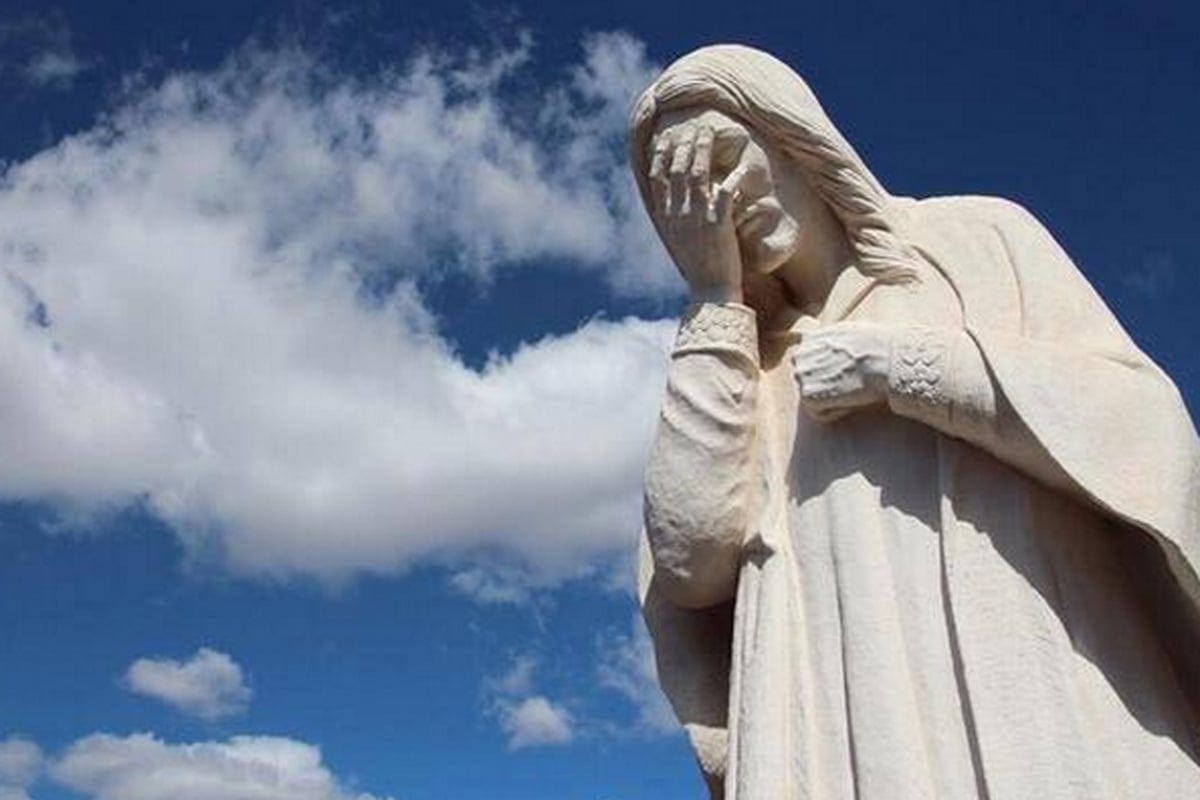
This idea is also not unique to Christianity. Across the mystical traditions of the world, we find parallel expressions of the same truth. For the sake of brevity, here’s a short summary:
In Advaita Vedanta, the realization “Aham Brahmasmi”, I am Brahman, captures the understanding that the Self is one with the Absolute.
In Sufism, the mystic Al-Hallaj’s declaration “Ana al-Haqq” (“I am the Truth”) cost him his life, yet it reflected the dissolution of ego into the Infinite.
Kabbalah speaks of the indwelling spark of the Divine, the Neshamah, as the emanation of the Infinite (Ein Sof) within the human soul.
Taoism points to the nameless Tao that can only be lived but never defined.
Buddhism, though framed through the language of no-self, directs the seeker toward recognition of an unbounded awareness beyond the illusions of identity. Buddhism peels away the layers of “I am this” and “I am that” until only the awareness of “I Am” remains.
Even the Norse traditions understand this mode of being, where Odin shows that you can understand reality completely, act nobly within it, and still remain unable to save or transcend it, but you have fully embodied it.
Though the languages and metaphors differ, the mystics of every tradition converge. The deepest truth of the human being is not the personal ego, but the universal, divine awareness that simply says, “I Am.”
Synthesis
As Jared and I wrangled with this topic, I struggled with the sense of heresy instilled in me. Who was I to dare suggest that “I Am” like I were God?
On the other hand, that’s exactly what the Bible tells us to do, and the idea that I can is, frankly, empowering and humbling. "Take up your cross and follow me"4 has nothing to do with ego and everything to do with dying to that ego to be reborn and embodied in a new way of thinking and acting. Which is exactly what Jesus talks about in John 3.
Am I there yet? I Am… not. But that’s because Seeking, Knowing, and Embodying is a cyclical, not linear transition. Just like Polymathic Being advises to Learn, Unlearn, and Relearn, each stage of our lives continues to evolve and process these lessons. I’ve embodied some ideas, I know others, and I’m still seeking an infinite number more.
That’s where I can’t shake just how much agency it demands. “I Am” shatters the shackles of disassociation. What I mean here is that, in common Christianity, too often we are taught to take a passive approach. All have fallen short of the glory of God. We can’t do anything but rely on salvation. In the extreme, it’s only about grace, and no action we take is sufficient. This view denies our agency and absolutely blocks people from maturing while also keeping us from the promised fulfillment.5
Simply put, it runs counter to Jesus’s call to action, and what Jared and I have found by responding to that call is transcendent, ego-destroying, and fulfilling. We are no longer chasing those highs because we realize that the goal isn’t an external salvation but an internal embodiment of “I Am,” and that is salvation from this world.
“I think, therefore I am.” - René Descartes
There are many written attempts to capture this change in perception; to realize the spiritual understanding of one’s true essence, and to answer the call to awakening. From Seeker, to Knower, to Embodiment of the I AM. Below are verses taken from the Christian Bible to illustrate this deeper meaning. They are some of the clearest biblical passages that describe spiritual awakening, inner transformation, and the realization of divine union; the “Christ within” experience.
John 10:30
“I and the Father are one.” (of the same essence)
John 14:20
“On that day (awakening) you will know that I am in my Father, and you in me, and I in you. (We all share the same essence)
John 17:21–23
“That they may all be one; just as You, Father, are in me, and I am in You, may they also be in Us… I in them and You in me, that they may become perfectly one.” (We share the same divinity)
Colossians 1:27
“Christ in you, the hope of glory.”
Galatians 2:20
“It is no longer I who live, but Christ lives in me.” (Ego replaced by I AM/True Self)
1 John 2:27
“The anointing you received from Him abides in you… it teaches you about all things.” (We are all set apart when our perception shifts to our true identity)
2 Corinthians 5:17
“If anyone is in Christ, he is a new creation; the old has gone, the new has come!” (To be “in Christ” is to share in the awakened perception that our inheritance has always been I AM. Our old identity has been crucified, and the new realization of the I AM has risen)
Romans 12:2
“Be transformed by the renewing of your mind.”
Ephesians 4:22–24
“Put off your old self… be renewed in the spirit of your mind… put on the new self, created after the likeness of God.” (This may be the clearest message illustrating these points)
John 3:3
“No one can see the kingdom of God unless they are born again… born of Spirit.”
Psalm 82:6
“I said, ‘You are gods; you are all sons of the Most High.’” (Our birthright; our true essence is shared divinity)
Genesis 1:26–27
“God created mankind in His image and likeness.”
2 Peter 1:4
“…you may become partakers of the divine nature.”
Luke 17:21
“The kingdom of God is within you.”
1 Corinthians 3:16
“Do you not know that you are God’s temple and that God’s Spirit dwells in you?”
1 Corinthians 6:19
“Your body is a temple of the Holy Spirit within you.”
1 John 4:16
“God is love, and whoever abides in love abides in God, and God abides in them.”
John 15:4–5
“Abide in me, and I in you… apart from me you can do nothing.”
1 Corinthians 2:16
“We have the mind of Christ.”
Philippians 2:5
“Let this mind be in you which was also in Christ Jesus.”
See past the illusion of ego, awaken to the perception that we are children of the Divine made in its image and share in that birthright, embody the I AM, and become co-creators in relationship so that we may live out our purpose.
Their primary language would be Aramaic, though they may have spoken Greek as apostles, like Paul, who was a Pharisee and more educated.
It should be added that the ‘Burning Bush’ is also read as a euphemism for psychedelics, similar to ‘smoking a blunt as the Acacia bush in that region has one of the highest levels of natural DMT of any plant. To those who have studied psychedelics, the entire encounter is incredibly similar to how people describe a Hero’s Journey
Not to distract from the main thrust, but the word Christian literally means ‘Little Christ’ and in a proverbial sense "all that is noble, and good, and Christ-like” (History of the Christian Church, Volume I: Apostolic Christianity. A.D. 1-100 by Philip Schaff:
Matthew 16:24, Mark 8:34, Luke 9:23
One of the most horrifying descriptions I’ve heard for the reason for our human existence is to “Glorify God.” I don’t know what sort of ego-infused idea this is, but if your God created everything merely to direct that energy into a synchophantic glorification… I want nothing to do with it. However, this reflects something deeper in that mindset, in that it’s what they would do if they were God. This mindset is that of a seeker at best and will likely have the most visceral reaction to the idea of “I Am” embodiment because to deny God that ego and identity means their identity and belief IN that God is challenged.
You've given me much to think about. I am curious, did you ever read the Gospel of Thomas, and if so, do you find it contradicts or support your position here? My sense when I read Thomas is that it fully supports your view.
Talk about great timing, Michael.